
A Kimono That Makes the Whole Surface Count
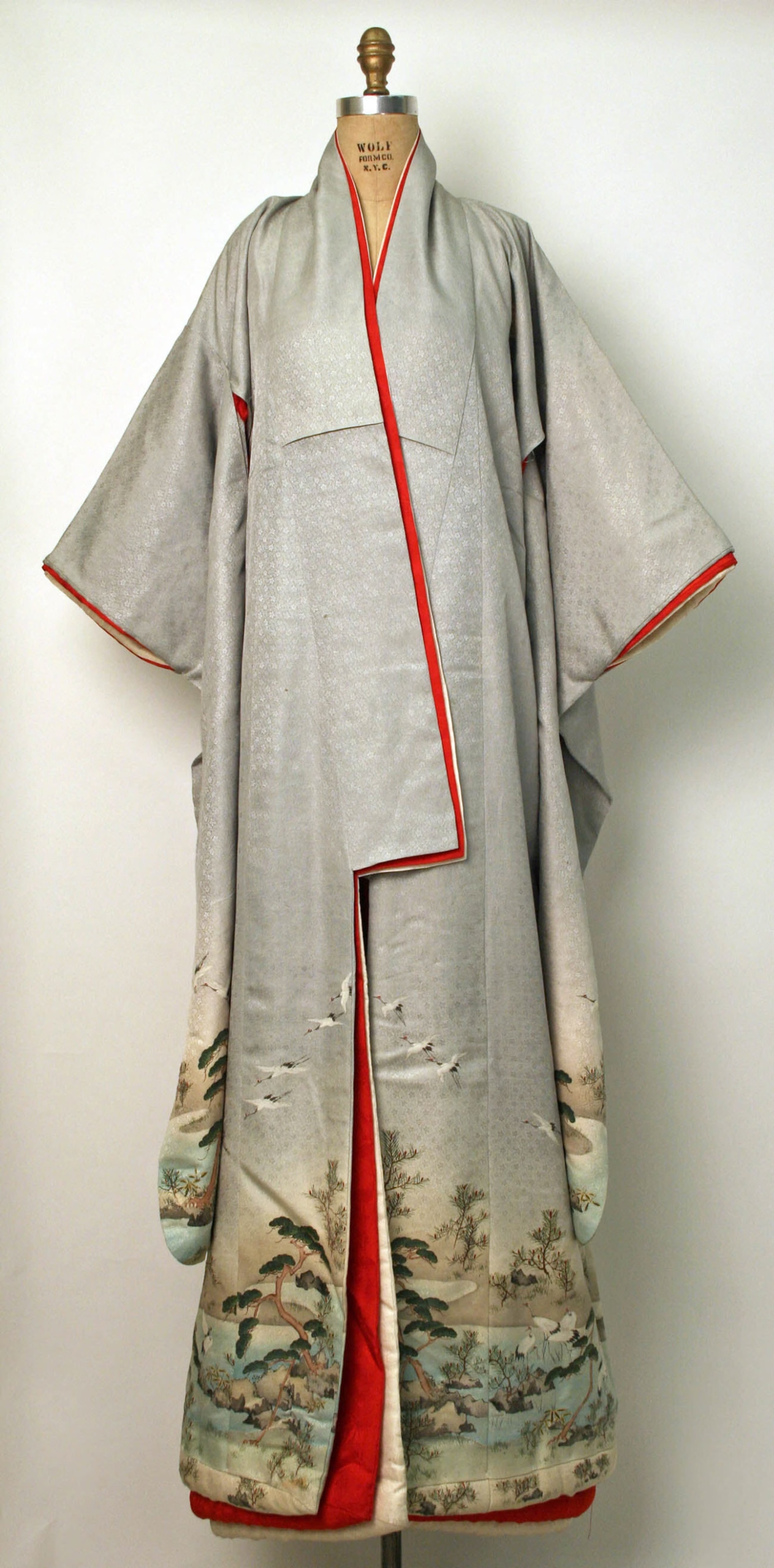
A flash of red, a quiet stretch of silk, and a landscape worth following all the way to the hem.
The red gets there first. It runs down the opening, catches the edges of the sleeves and peeks out beneath the hem. Then the rest of this silk kimono begins to reveal itself. There is a whole landscape down there. Give it a moment.
The Metropolitan Museum of Art identifies the garment as Japanese and dates it broadly to 1800–1941. That is a substantial span, and the record does not narrow it to a particular year or name its maker. What the photograph does offer is a lovely lesson in where to put the excitement.
Across the upper body, pale fabric leaves room for a delicate surface pattern. Lower down, trees lean across the cloth, birds gather and take flight, and little stretches of land and water carry the eye from one panel to another. The decoration changes pace as you look down the garment.
That generous area above the landscape matters. It lets the smaller details register without making every inch compete. Meanwhile, the red keeps tracing the outline. Even when your attention wanders into the scenery, there is a strong line waiting to bring you back.
There is something useful here for anyone who enjoys getting dressed: placement can be as interesting as quantity. A concentrated patch of pattern, an unexpected lining or an edge in a sharp color can give the eye plenty to do. This garment makes a particularly beautiful case for looking beyond the center of an outfit.
Start at the collar and follow the red down. Then spend a little time with the birds near the hem. The longer you look, the less likely you are to call this simply a pale robe. The scenery has earned its attention.
Explore the object: Kimono at The Metropolitan Museum of Art.
Kimono, 1800–1941. The Metropolitan Museum of Art, Gift of Mrs. Van S. Merle-Smith, 1941. Accession C.I.41.110.69. Image: The Metropolitan Museum of Art, Open Access, Public Domain / CC0. Collection record. Image use terms.