
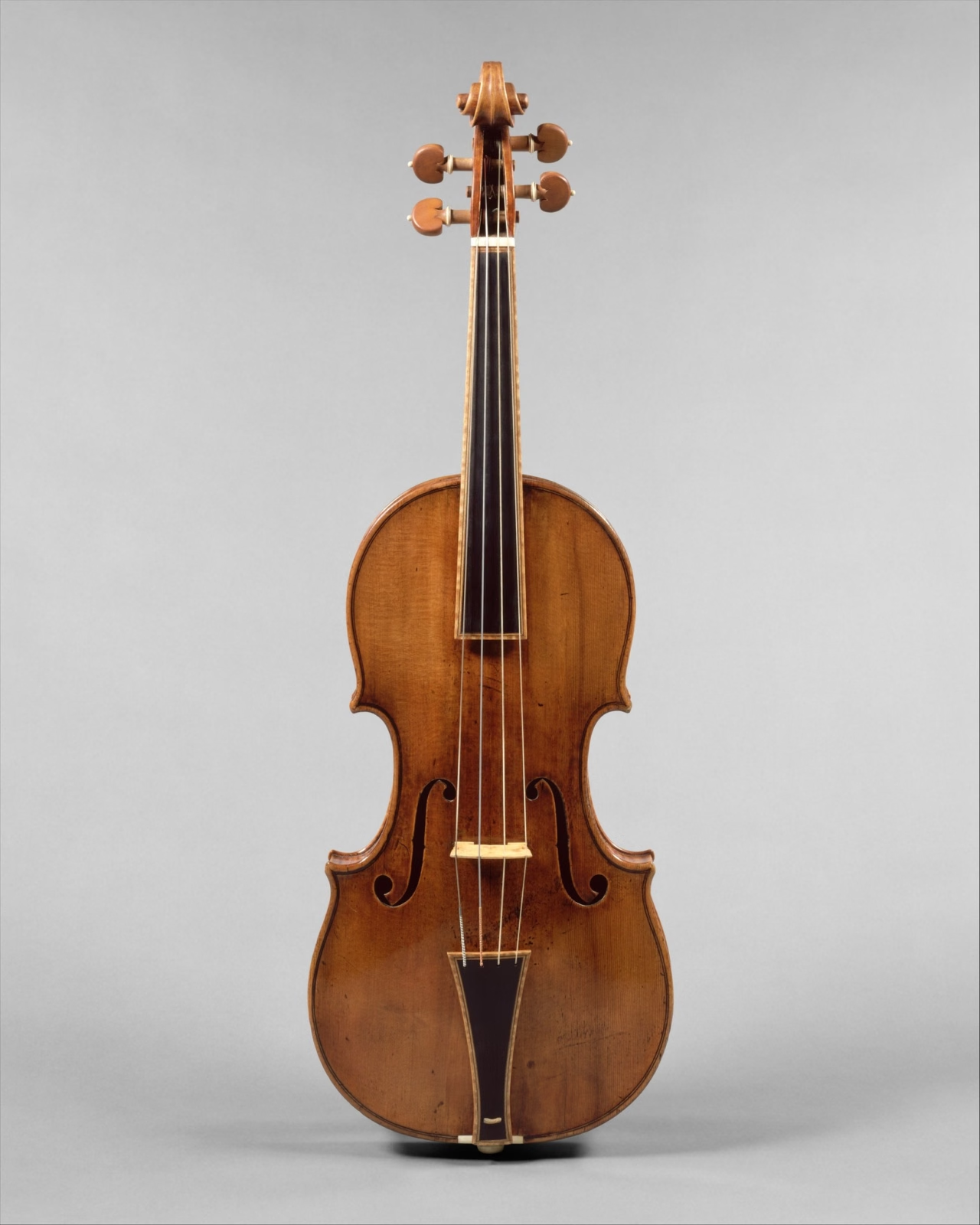
The Gould violin offers a useful detour into the hardware behind musical history.
Before you press play, take a look at the instrument. The amber-brown body, dark fingerboard and little carved scroll are familiar enough. But Antonio Stradivari’s Gould violin has a story that makes the usual question of how old it is feel a little incomplete.
Stradivari made it in Cremona in 1693. Much later, in 1975, The Metropolitan Museum of Art had luthier Frederick J. Lindeman return it to a Baroque configuration. This was a reconstruction informed by historical examples, rather than an untouched instrument carried straight out of the seventeenth century.
The museum describes a shorter neck and bass bar, gut strings and replacement fittings. Lindeman modeled the fingerboard and tailpiece on surviving original examples from another Stradivari. That matters because the instrument a musician plays is shaped by more than the famous name attached to it.
In a separate comparison of the Gould and the museum’s Francesca violin, curators explain how alterations helped older violins meet changing demands for range and volume. The same maker’s work can arrive in a performer’s hands with very different equipment.
The Gould collection page includes recordings, giving curious listeners somewhere to go beyond the photograph. Start there, then look again at the neck, strings and bridge. A concert begins long before someone raises a bow. Sometimes the first interesting conversation is with the instrument itself.
View the museum collection record and recordings.
“Gould” Violin, 1693. Antonio Stradivari. The Metropolitan Museum of Art, Gift of George Gould, 1955. Accession 55.86a–c. Image: The Metropolitan Museum of Art, Open Access, Public Domain / CC0.
Thank you for reading independent culture. Join the discussion below.
Talk with Leah & Chetuno
We read contributions personally. New comments are reviewed before publication; a response may take a little time.