
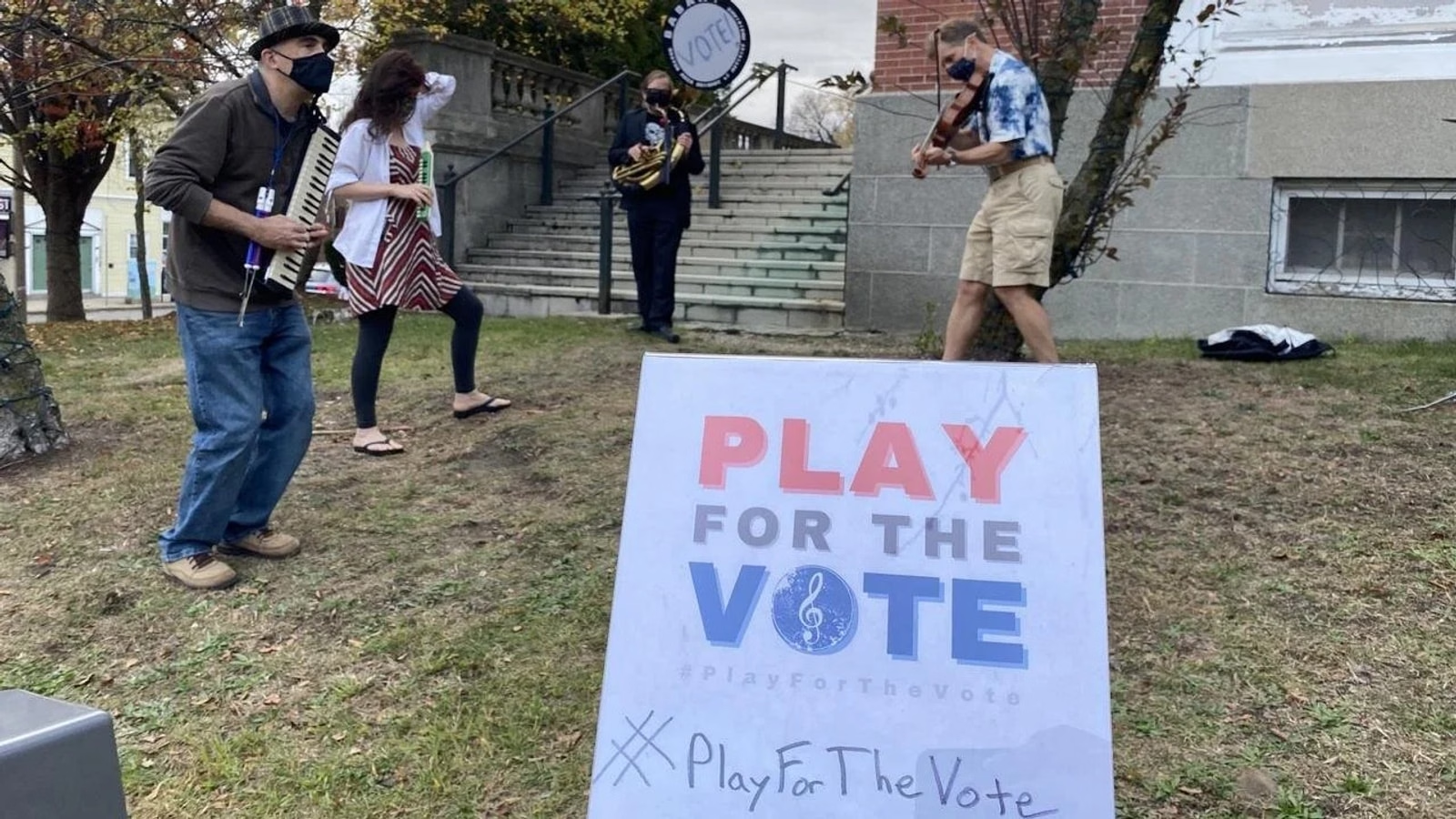
A musician near a polling place occupies a delicate role. The performance can ease a wait, welcome families and celebrate participation, but it must never obstruct access or become prohibited electioneering.
Groups including Play for the Vote and Joy to the Polls organize within that boundary, coordinating performances and emphasizing nonpartisan participation. Local election rules govern distance, volume, signage and activity, so responsible events begin with permission and planning.
The most compelling moments are often small: a drummer changing the mood of a long line, a choir familiar to the neighborhood or a DJ connecting generations through a shared song. The music does not erase political difference. It creates a temporary public commons in which those differences do not prevent people from standing together.
After Election Day, that energy can support year-round community spaces, voter education and local arts. Democracy needs procedures, but it also needs culture—the practices through which strangers learn to recognize one another as participants in the same unfinished project.
Thank you for reading independent culture. Join the discussion below.
Talk with Leah & Chetuno
We read contributions personally. New comments are reviewed before publication; a response may take a little time.