
Orange County Votes: The Offices, Candidates and Decisions on Your November Ballot
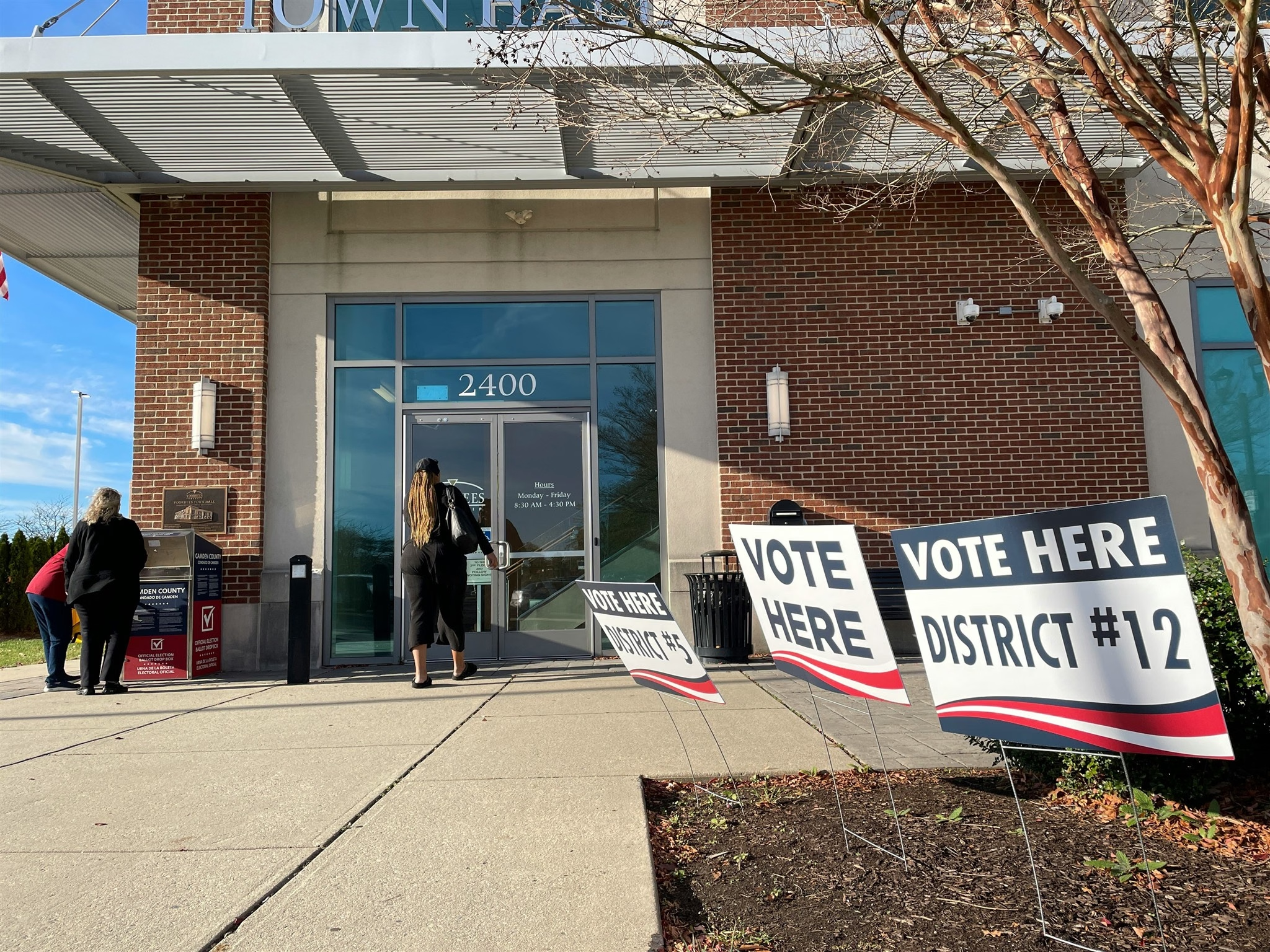
Featured photograph: Voorhees Township, New Jersey, November 2022—an illustrative image, not Orange County or the 2026 election. Photo: Ernie Journeys / Unsplash.
Orange County, Florida · November 3, 2026 general election · By Chetuno
This guide covers every contest on the county composite ballot. It includes campaign priorities and selected documented actions, with no candidate endorsements. Where a platform or a past promise could not be established, that gap is identified rather than filled with a guess.
The ballot is where the big arguments turn into specific choices. A tax proposal. A court seat. A school budget. A commissioner deciding what gets built beside the road you take to work.
For Orange County residents, including those in Orlando, the November 3 election reaches from Washington to neighborhood infrastructure. This guide puts every contest in the county’s official composite ballot in one place, explains the job behind the title and summarizes the candidates’ published positions without recommending a party or a candidate.
Your own ballot will be shorter. Your address determines your congressional, legislative, county and special-district contests. A countywide composite is a reporting checklist, not a ballot every voter receives. The Orange County mayoral race is not an election for Orlando’s city mayor.
Read the official county composite ballot · Find your own sample ballot
Jump directly to an office
- U.S. Senate
- U.S. House, District 8
- U.S. House, District 9
- U.S. House, District 11
- Governor and lieutenant governor
- Attorney general
- Chief financial officer
- Commissioner of agriculture
- Florida Senate, District 10
- Florida House, District 35
- Florida House, District 37
- Florida House, District 39
- Florida House, District 40
- Florida House, District 42
- Florida House, District 43
- Florida House, District 45
- Orange County clerk of courts
- Orange County mayor
- County Commission, District 2
- County Commission, District 4
- County Commission, District 6
- County Commission, District 7
- County Commission, District 8
- School Board, District 3
- Soil and Water Conservation Supervisor, District 1
- Soil and Water Conservation Supervisor, District 3
- Soil and Water Conservation Supervisor, District 5
- Vista Lakes Community Development District, Seat 3
- Ninth Judicial Circuit judge, Group 1
- Florida Supreme Court: Carlos G. Muñiz retention
First, make the voting plan
Early voting ends Sunday, November 1. Orange County lists 27 locations, open daily from 8 a.m. to 8 p.m. You may use any early-voting location in the county. Check the official location list and current wait-time tool before leaving. Monday, November 2 is not part of that early-voting period.
Election Day is Tuesday, November 3, from 7 a.m. to 7 p.m. On that day, use your assigned polling place rather than whichever early-voting site was convenient. Voters in line by 7 p.m. may vote.
Bring valid photo and signature identification. If the photo ID lacks a signature, the county says to bring another identification containing it. A Florida driver’s license is one accepted option; consult the complete official list. The county says a voter without acceptable identification can use a provisional ballot.
The registration deadline for this election was October 5, and the deadline to request a ballot be mailed was October 22. Already have a mail ballot? Follow its signing and return instructions. The elections office must receive a voted, signed domestic mail ballot by 7 p.m. on Election Day; a November 3 postmark is not enough.
Orange County mail ballots can be returned at staffed intake stations at early-voting locations during early-voting hours. Do not assume those stations remain available after early voting ends. For office drop-off hours, tracking, accessibility or an unresolved registration or ballot question, use the county’s official resources or call 407-836-2070. Special rules apply to military and overseas voters.
Early-voting sites, hours and ID · Election Day rules · Mail-ballot return and tracking · Check your voter information
Which office can do what?
Follow an issue to the office with power over it. Most major changes require more than one official.
| Level | Decisions to look for | What one candidate cannot do alone |
|---|---|---|
| Federal: Senate and U.S. House | Federal taxes, spending, healthcare law and national policy | Set a county property-tax rate or manage a local school |
| State: governor and Legislature | Florida law, the state budget, insurance legislation and education rules | Deliver a whole platform without votes, funding and implementation |
| County: mayor and commissioners | County services, land use, roads, drainage and budgets | Create a federal institution or override every state restriction |
| School Board | District policy, budgets and oversight of the superintendent | Rewrite state education law through one member’s vote |
| Courts, clerk and special districts | Different, defined jobs: adjudication, records administration or district services | Use one office’s authority as a substitute for another’s |
A promise is a starting point. What happened next?
The useful questions are the same for every candidate: What exactly was promised? Was there a deadline? Did the office have the power to deliver it? Was a bill introduced, passed and signed? Was money actually spent? Did the promised service reach people?
Those stages deserve different descriptions. Sponsoring legislation is an action. Enactment is a legislative result. A lower household bill or a finished drainage project is a further outcome. None should be substituted for another.
A legislative result, with an implementation date
Erika Booth cites newborn screening legislation among her accomplishments. Florida’s official record for CS/CS/HB 1089 identifies Booth and Anderson among its sponsors, records final passage and shows the governor approved it on May 20, 2025, as Chapter 2025-51. The requirement for Duchenne muscular dystrophy screening begins January 1, 2027 and is subject to appropriation. The legislative accomplishment is verified; full implementation is a later question.
A proposal that did not become law
Leonard Spencer cites an interstate property-insurance compact among the measures he backed. The official record for Florida HB 319 in 2026 lists Spencer as a co-introducer and shows that the bill died in the Insurance & Banking Subcommittee on March 13. Backing the proposal is verified; enactment was not achieved. That does not establish a broken personal promise without an original commitment and deadline, and it does not support claiming that this bill already lowered premiums.
A recorded vote, rather than a campaign description
The U.S. Senate’s official roll call records Ashley Moody voting yes on final passage of H.R. 1 on July 1, 2025. The senators divided 50–50 and the vice president voted yes. The vote and Senate passage are verified actions. The effects of individual provisions and a claim that all promised economic benefits followed require separate evidence; a vote tally cannot prove them.
Elsewhere, the candidate cards distinguish published proposals, reported records and missing information. We have not assigned sweeping “kept” or “broken” scores where the reviewed evidence does not establish the original commitment and outcome. A candidate’s unanswered questionnaire is a reporting gap, not proof of wrongdoing. A promise about the term that has not started is not already broken.
Watch the limits of authority, too. A county mayor can advocate for a federal academy but cannot create one alone. A conservation supervisor can pursue education and partnerships without holding the county commission’s development powers. And an insurance proposal needs a funding and implementation plan before a promised saving becomes a result.
The candidates, office by office
Candidate photographs are linked to their original profiles where available. These links let you identify candidates without presenting campaign photographs as Bubbling Box-owned or openly licensed images.
Party labels follow the ballot. “Nonpartisan” describes the race, not a claim that a candidate has no political views. Published campaign positions are attributed below; they are not independent endorsements of feasibility.
U.S. Senate
Senators vote on federal laws, taxes and spending, confirm presidential nominees and consider treaties. This special election fills the remainder of the term ending in January 2029.
Ashley Moody
Current U.S. senator and former Florida attorney general. Her stated immigration agenda supports President Trump's enforcement policies. Her abortion-related record includes opposing the wording of the 2024 abortion-rights amendment in court. Those are documented positions, not evidence that every campaign promise has been delivered.
Angie Nixon
State representative from Jacksonville. Proposes more affordable housing, rental assistance and greater transparency around rent and fees. Supports fewer abortion restrictions, stronger public-school funding and a different approach to immigration enforcement. These are proposals for federal office; several would require congressional cooperation.
Neil J. Gillespie
Listed on the official ballot. The News Collaborative reports that he did not respond to its questionnaire. His campaign blog is linked in that guide; a comparable, sufficiently documented policy platform was not established in the material reviewed. That gap is not an endorsement or a finding about his fitness.
U.S. House, District 8
Representatives vote on federal legislation and spending and conduct oversight. Only residents assigned to this congressional district vote in this contest.
Mike Haridopolos
View candidate photograph at its source →
The incumbent and a former Florida Senate president. His campaign emphasizes immigration enforcement, the Indian River Lagoon, space exploration, competitive healthcare pricing and reducing federal mandates. He did not complete the collaborative questionnaire; its profile draws on his campaign's published positions.
Jennifer Jenkins
Former Brevard school-board member. Her published agenda includes a federal insurance catastrophe backstop, stronger Affordable Care Act subsidies, protection for pre-existing conditions and opposition to tariffs she argues increase household costs. She also did not complete that questionnaire; these positions come from her campaign material.
U.S. House, District 9
The same federal powers apply here. A congressional representative does not control the Orange County property-tax rate.
Dan Green
View candidate photograph at its source →
A Navy Reserve officer and former Defense Department official. His questionnaire emphasizes reducing regulation and bureaucracy, price transparency and market competition to address affordability. His national-security experience is part of his case for office; it does not establish that a proposed domestic policy will achieve its promised savings.
Darren Soto
View candidate photograph at its source →
The incumbent and an attorney. Campaigns on lowering costs, protecting healthcare and addressing corruption. Cites federal support for transportation, housing, water and technology projects as his record. Those delivery claims should be assessed project by project; federal investment often involves several agencies and elected officials.
U.S. House, District 11
Federal lawmaking, spending and oversight. This is one of the congressional contests on the county composite ballot; it will not appear on every resident's ballot.
Joe Strada
Runs Strada Services, an air-conditioning, electrical, security and plumbing business. The collaborative reports that he did not return its questionnaire. A business background or party label does not establish a detailed platform; his campaign website is available through the linked profile.
James Pericola
Attorney and government-policy consultant. Proposes affordable-housing investment, changes to property-insurance support and eliminating federal income tax for people earning under $100,000. That tax proposal would need legislation and a financing explanation; a campaign statement does not establish its fiscal effects.
Ralph Groves
Retired Army veteran. Calls for action on federal-benefit fraud and congressional control of extended military deployments. Describes a restrictive abortion position with medical exceptions. His party label alone would not tell a voter those details; the questionnaire provides his own explanation.
Governor and lieutenant governor
The governor leads the state executive branch, proposes a budget, signs or vetoes bills and makes appointments. The lieutenant governor runs on the same ticket. Neither can enact an entire legislative agenda alone.
Byron Donalds / Bryan Avila
View candidate photograph at its source →
Donalds proposes insurance changes, healthcare-price transparency and faster permitting. His current campaign supports Amendment 3. These are proposed state policies.
David Jolly / Gwen Graham
Jolly proposes a state catastrophe-insurance fund, Medicaid expansion, workforce housing and higher teacher pay. These commitments would require funding and legislative action.
Scott Eckhard Jewett / Nicole Skelly
Jewett emphasizes living costs and eliminating homestead property taxes. The reviewed guide does not establish a detailed replacement-revenue plan.
Charles Burkett / Ruben A. Coto
Burkett favors reducing development and sharply cutting or eliminating homestead property taxes. His questionnaire connects those positions to affordability.
Frank J. Russo / Rachel Rodriguez
Russo proposes hurricane/wind coverage changes, a homeowner bill of rights and clearer explanations of insurance premiums and decisions.
Moliere “Moe” Dimanche / Benjiman Rojas
Dimanche emphasizes corruption and a state program acquiring abandoned homes for eligible residents. Implementation and financing remain proposals.
Dean Ocean Abrams / Joe Van Vactor
Abrams emphasizes insurance transparency, healthcare and opposition to automatic license-plate-reader systems. His published plans require further implementation detail.
Jeffrey Peter “Dr. Jeff” Datto / Juan Santana
The ticket appears on the ballot. The collaborative reports no questionnaire response; a comparable verified platform was not established.
Qualified write-in option
The ballot also provides a write-in line. Use the official candidate records to verify eligible write-in names; an arbitrary name is not equivalent to a qualified candidacy.
Attorney general
Florida's chief state legal officer represents the state and handles responsibilities including consumer protection and specified prosecutions. County state attorneys remain separate offices.
James Uthmeier
The incumbent and former chief of staff to Governor Ron DeSantis. Publicly emphasizes child-predator prosecutions and data protection. Did not return the collaborative questionnaire. His record should be assessed through official legal actions and outcomes, rather than treating the number of announcements as a measure of success.
Jose Javier Rodriguez
Attorney and former state legislator. Proposes stronger witness protection, investigations of misuse of public money and protection of conservation land. Those are stated enforcement priorities; a promised investigation does not establish wrongdoing or predetermine a legal outcome.
Chief financial officer
The CFO oversees the Department of Financial Services and serves as state fire marshal. Insurance responsibilities are shared with other officials and the Office of Insurance Regulation; the CFO cannot simply set every homeowner's premium.
Blaise Ingoglia
View candidate photograph at its source →
The appointed incumbent, former state legislator and homebuilder. Emphasizes local-government audits, property-tax reductions, insurer accountability and first responders. Those priorities should be distinguished from measurable household savings; an audit announcement alone does not prove a lower tax bill.
Annette Taddeo
View candidate photograph at its source →
Businesswoman and former state senator. Calls for stronger insurance oversight, prompt and fair claims handling and meaningful human review of algorithmic decisions. Presents her Banking and Insurance Committee experience as preparation for consumer oversight.
Commissioner of agriculture
Leads the Department of Agriculture and Consumer Services, with responsibilities extending from farming and forestry to food safety and consumer services. This is not simply a job representing large farms.
Wilton Simpson
The incumbent and an egg-farm owner. Highlights agricultural land preservation, wildfire protection and Florida-grown food programs. Funding a program and proving its long-term environmental results are different measures; his cited budget allocations are a starting point for reviewing the record.
Joey Mendoza Atkins
Attorney with graduate training in international economic development. Emphasizes accountable administration, consumer protection, support for agriculture and responsible stewardship of resources. His questionnaire presents those as priorities for leading a large, varied state agency.
Qualified write-in option
A write-in line is included on the official ballot. Check the official qualified-candidate record before writing a name.
Florida Senate, District 10
State senators write and vote on Florida law and the state budget. State decisions can expand or restrict local authority over development, taxes and other issues.
Jason Brodeur
View candidate photograph at its source →
Incumbent senator. Proposes homestead property-tax relief, continued insurance reforms, transportation and water investment and action on fentanyl. Presents existing insurance legislation as progress; whether a particular resident's premium fell requires evidence beyond the passage of a bill.
John Lowndes
Maitland mayor and healthcare legal counsel. Proposes public-option windstorm insurance, limits on utility returns, stronger school funding and voucher accountability. Supports restoring local decision-making and protecting rural boundaries.
Florida House, District 35
State lawmaking and appropriations. A representative can introduce a funding request; a governor can still veto the appropriation.
Erika Booth
Incumbent and public-school teacher. Cites firefighter-health, newborn-screening and trafficking-awareness bills as accomplishments. Says a Wedgefield water request was reduced and then vetoed. That is an example of why introducing or passing funding is different from delivering a completed project.
Eric Gray
Leads the Christian Service Center for the Homeless. Emphasizes housing affordability, healthcare, public education and government accountability. Cites nonprofit leadership and planning experience as preparation for addressing the district's cost pressures.
Florida House, District 37
State lawmaking and budget decisions; only district residents vote in this race.
Robert Prater
View candidate photograph at its source →
Orange County public-school teacher. Proposes career and technical education, attracting better-paying industry and addressing insurance premiums and toll costs. His affordability argument combines higher earnings with lower household expenses.
Jane Aman
View candidate photograph at its source →
UCF English lecturer. Proposes more affordable housing, changes to insurance and sales-tax policy, higher school funding and teacher pay, and better access to preventive healthcare and transparent medical billing.
Florida House, District 39
State lawmaking and appropriations. Tax cuts and replacement revenues should be read together.
Doug Bankson
View candidate photograph at its source →
Incumbent and pastor. Supports maintaining tort reforms and stronger insurance oversight. His questionnaire discusses possible replacement revenues and service changes if property-tax collections fall. Those alternatives have different effects on homeowners, renters and visitors.
Jarod Fox
Infectious-disease physician. Proposes affordable-housing investment, Medicaid expansion, lower medicine costs and infrastructure that keeps pace with growth. His platform puts healthcare access alongside housing and transportation.
Florida House, District 40
State lawmaking and spending; the county and city governments remain separate decision makers.
Tuan Le
Engineer. In the collaborative's published interview, describes state preemption as a case-by-case question and argues that inconsistent local regulation can impede development and economic activity. Does not endorse every state intervention merely because his party proposed it.
Ra'Shon Young
The incumbent, first elected in a 2025 special election. Published priorities include healthcare access, housing and insurance affordability, public schools and workforce development. The collaborative reports that he did not return its questionnaire or interview request; its profile draws on other published material.
Florida House, District 42
State lawmaking and budget authority, including insurance, education and state limits on local development rules.
Bonnie Jackson
Attorney. Proposes property-tax relief, streamlined permitting, privacy rules for AI and data collection, and stronger water infrastructure. Describes preemption as an issue to assess on its specific facts rather than an automatic rule.
Felipe Sousa Lazaballet
Executive director of HOPE CommUnity Center. Proposes affordable-housing and insurance reforms, public transit, stronger public-school funding and wider healthcare access. Opposes school privatization and emphasizes support for underserved communities.
Florida House, District 43
State lawmaking and spending. A campaign's criticism of a local school decision should be separated from the authority of the School Board that made it.
Jorge Malavet
View candidate photograph at its source →
Retired Navy officer and former immigration-service manager. His published agenda emphasizes families, dependable work, education and lawful immigration. Did not return the collaborative questionnaire; that source does not establish his position on every question, including home rule.
Samuel Vilchez Santiago
Nonprofit-sector manager and Orange County Democratic Party chair. Emphasizes housing, property-insurance reform, Medicaid expansion, good-paying jobs and stronger neighborhood public schools. These are campaign commitments rather than completed legislative outcomes.
Florida House, District 45
State lawmaking and appropriations; new insurance models require legislation and implementation.
Erin Huntley
View candidate photograph at its source →
Proposes homestead property-tax reform, vocational education, parental participation and action on insurance fraud. Says school, emergency-service and infrastructure funding should be protected while taxes fall. The financing mechanism matters to evaluating that promise.
Leonard Spencer
Incumbent and business executive. Cites sponsorship or co-sponsorship of insurance proposals, including an interstate risk compact and changing Citizens' windstorm role. Sponsoring a proposal is a documented action, but does not itself show that the policy became law or reduced premiums.
Orange County clerk of courts
The clerk administers court records and public-facing court services. The clerk does not decide guilt, sentences or the merits of a lawsuit.
Roberta Walton Johnson
View candidate photograph at its source →
Prioritizes access to justice, easier court navigation, modernized online services and secure, accurate public records. Her promises can be tested through service availability, processing times and published technology and security improvements.
Terrell Thomas
Proposes stronger employee development, mobile neighborhood services, improved case-management technology and cybersecurity. Both candidates emphasize access and modernization; their implementation plans, funding and measurable service standards are useful points of comparison.
Orange County mayor
The county mayor leads county government and its administration and works with commissioners on the budget and regional issues. Orange County mayor is a different job from City of Orlando mayor.
Chris Messina
View candidate photograph at its source →
Technology entrepreneur. Proposes economic diversification toward high-tech and space-related employment, including pursuing a Space Force academy. Recruiting an academy would depend on federal decisions; the county mayor could advocate for it but could not create it unilaterally.
Tiffany Moore Russell
Orange County clerk of courts and former commissioner. Proposes workforce and affordable housing, preservation of existing housing, mixed-income development and transportation and stormwater planning alongside growth. Delivery would require budgets, partnerships and coordination with municipalities.
County Commission, District 2
Commissioners vote on county budgets, land use, ordinances and services. Their responsibilities are county-level, not a substitute for state legislative powers.
Kamia Brown
View candidate photograph at its source →
Proposes faster, more accountable permitting and inspection, workforce housing, workforce-development partnerships and infrastructure that keeps pace with growth. Measurable turnaround standards would make the permitting promise easier to evaluate.
Mike Crabb
Incumbent commissioner. Prioritizes public safety, water and stormwater systems, septic-to-sewer work near the Wekiva Basin and congested intersections. Proposes concentrating spending on essential services while attracting higher-paying private-sector work.
County Commission, District 4
County budgets, land use and services. The ballot includes two printed names and a write-in line.
Brian Jones
Proposes a district advisory network and quarterly town halls to bring residents into decisions earlier. His questionnaire makes communication and transparency central; public meeting schedules and documented follow-through would provide tangible tests.
Johanna Lopez
View candidate photograph at its source →
Her published priorities are accessible housing, small-business support and government accessibility and transparency. Did not return the collaborative questionnaire. Its reporting identifies her state legislative record, but this edition does not assign a kept-or-broken verdict without checking the underlying vote and commitment.
Isabella Arthur
Proposes infrastructure before expansion, more affordable housing, wetland protection and stronger public reporting on publicly funded work. Her name is not printed as a selectable candidate; voters choosing her must use the write-in line.
County Commission, District 6
County budgeting, development and services; neither candidate would control all local agencies alone.
Lawanna Gelzer
View candidate photograph at its source →
Community organizer. Proposes a neighborhood advisory council, an infrastructure audit and resident reporting of neglected roads, lights and drainage. Her approach emphasizes bringing meetings into neighborhoods and making spending priorities visible.
Michael “Mike” Scott
View candidate photograph at its source →
The incumbent. Prioritizes affordable-housing investment and a wider range of housing types, employer recruitment, mentoring, senior services and educational and vocational opportunities. Continuing a program and demonstrating its results are separate questions for voters.
County Commission, District 7
One of Orange County's newly added commission districts. Use the current precinct lookup rather than assuming an older district map still applies.
Patricia Rumph
Proposes workforce housing, streamlined permitting, transportation and infrastructure investment, youth violence prevention and emergency preparedness. Cites nearly three decades with the Florida Department of Corrections as relevant public-service experience.
Vicki Vargo
Prioritizes public safety and youth violence prevention, followed by affordability and access to food assistance outside standard daytime hours. This guide reports those priorities without repeating unsupported statistical or causal claims from campaign material.
County Commission, District 8
Another newly added district. The commissioner participates in countywide votes while representing district concerns.
Jeannette Quinones Hernandez
View candidate photograph at its source →
Proposes road improvements and better connectivity, stronger stormwater management and wetland protection. Emphasizes public-private partnerships, permitting and effective use of impact fees to meet growth-related infrastructure needs.
Victor M. Torres Jr.
View candidate photograph at its source →
Former state senator and LYNX bus driver. Proposes workforce housing, expanded LYNX service, continued SunRail investment, safer intersections and stormwater improvements. Argues that reducing congestion requires transportation choices alongside roads.
School Board, District 3
The School Board sets district policy and budgets and supervises the superintendent. A single member cannot independently change state education law or every classroom practice.
Diana Moore
Emphasizes parental choice, virtual and magnet options, understanding why families and teachers leave the district and addressing compensation. Proposes exit surveys as one way to examine declining enrollment rather than assuming a single cause.
Susanne Peña
View candidate photograph at its source →
Proposes evidence-based instruction, bilingual education, STEAM and career pathways, competitive educator pay and professional development. Emphasizes accountability for schools receiving public money and transparent responses to enrollment challenges.
Soil and Water Conservation Supervisor, District 1
These supervisors support conservation education, technical assistance and partnerships. They do not replace the county commission or water-management districts as permitting authorities.
Quinnie Perez
View candidate photograph at its source →
Emphasizes farmworker conditions, flood resilience, wetland restoration and conservation education. Her proposals include advocacy with county and state officials; changing wages or housing law would require action beyond this conservation board.
Vicente Rafael Perez Carreno
View candidate photograph at its source →
An associate supervisor and treasurer of the conservation district. Proposes practical education on irrigation, stormwater, flood preparedness and the district's work, with greater visibility and accessibility for the public.
Doug Sahr
Proposes an advisory role in stormwater planning, stronger coordination on construction runoff and helping remaining agricultural landowners obtain conservation planning and technical assistance.
Soil and Water Conservation Supervisor, District 3
Conservation assistance, public education and partnerships. Distinguish a proposed advisory project from the regulatory powers held by another agency.
Chuck Drake
Licensed professional geologist and longtime hydrogeologist. Emphasizes drinking-water supply, water quality and conservation, including the relationship between lower water use and household bills.
Erik LaMont Melear
View candidate photograph at its source →
Prioritizes public education, flood resilience and water quality. Proposes school and community outreach on runoff, fertilizers, soil restoration and stormwater, including possible student internships.
José Antonio Rodriguez
The official ballot includes him. The collaborative reports no questionnaire response and lists no website. A comparable policy platform was not established in the material reviewed; no position is inferred from his name or the office sought.
Soil and Water Conservation Supervisor, District 5
Conservation education and assistance, not unilateral control of development approvals.
Zack Green
Listed on the ballot. The collaborative reports no survey response and no website. This edition does not invent policy positions to fill that reporting gap.
Jimm Middleton
View candidate photograph at its source →
Proposes a public-outreach effort explaining conservation assistance, more current websites and direct community involvement in choosing projects. Emphasizes reaching both English- and non-English-speaking residents.
Vista Lakes Community Development District, Seat 3
A community development district is a special-purpose local government serving a defined area. Its board handles district responsibilities and financing; it is not the Orange County commission.
Bennie Hichez
Named on the county's composite ballot for this seat. A sufficiently documented platform was not established in the sources reviewed. Residents should examine district agendas, budgets and candidate statements before comparing proposed priorities.
Frank J. Sebestyen
Also named for Seat 3 on the official composite ballot. No comparable verified platform is assigned here without supporting material. Only voters eligible for this district contest will see it on their own ballot.
Ninth Judicial Circuit judge, Group 1
Circuit judges hear cases and apply the law. This election selects between two candidates; it is different from a yes-or-no retention vote.
Temika Hampton-Johnson
View candidate photograph at its source →
Emphasizes experience in probation, parole and public defense and treating litigants respectfully regardless of personal disagreement. Her questionnaire focuses on temperament, access and confidence in the courts.
Charles Hart
Attorney with prosecution, public-defense and private-practice experience. His published campaign statement emphasizes courtesy, patience and an accessible, efficient court. Did not return the collaborative questionnaire. Party associations do not change the nonpartisan structure of this judicial election.
Florida Supreme Court: Carlos G. Muñiz retention
A retention question asks whether to keep a sitting justice. It does not offer a named opposing candidate. A vacancy would be filled through Florida's appointment process.
Carlos G. Muñiz
Appointed to the court in 2019. His professional background includes government legal work at the federal and state levels. Voters can examine opinions, judicial conduct and legal reasoning. A judge's role is to apply law; promises to guarantee particular case outcomes would be a different and troubling standard.
The ballot questions
A yes vote adopts the proposed change; a no vote rejects it. The three state amendments need at least 60 percent approval. Read the actual language alongside these summaries.
Amendment 1: Budget Stabilization Fund
Would increase the state reserve fund’s ceiling from 10 to 25 percent of general revenue collections, require annual transfers subject to specified exceptions and permit withdrawals for critical state needs.
Yes: adopt the larger reserve framework. No: leave the existing constitutional framework in place. The trade-off is between a larger buffer and money available for present spending; the title alone does not tell you how future lawmakers would use the discretion.
Amendment 2: Agricultural tangible personal property
Would exempt qualifying tangible personal property on agricultural land, used for agricultural production or agritourism and owned by the landowner or leaseholder, from property taxation beginning in 2027.
Yes: create that exemption. No: retain current treatment. This concerns qualifying equipment and other tangible property, rather than a general exemption for every building or every household.
Amendment 3: Homestead exemptions and property assessments
Would increase the non-school homestead exemption to $150,000 in 2027 and $250,000 in 2028, followed by inflation adjustments. It also includes different timing for certain new residents, options for further local exemptions, a reduction in the annual non-homestead assessment-growth cap from 10 to 5 percent and provisions governing local property-tax spending.
Yes: adopt the package. No: keep the existing constitutional provisions. The advertised benefit is lower property-tax exposure for eligible owners; the other side of that calculation is revenue available to local governments. A lower assessment or larger exemption is not a promise that every resident’s total housing bill falls by the same amount. Renters should not assume an automatic matching rent reduction.
Orange County schools: Continue the one-mill levy?
This is a separate local question. It asks whether to continue the existing one-mill operating levy from July 1, 2027 through June 30, 2031, supporting compensation, academic programs, arts, athletics and activities, with the required charter-school share and annual reporting.
Yes: continue the levy for that period. No: reject its continuation. One mill is $1 per $1,000 of taxable value, so $300,000 in taxable value corresponds to $300 annually for this one component. That example is arithmetic, not a personalized tax estimate. Existing does not mean cost-free; continuation does not mean a newly added mill.
Read all four questions in the official composite ballot · Florida Constitution
Read past the headline
This edition uses Orange County’s official composite ballot as its contest checklist and the county’s election pages for voting instructions. Candidate summaries draw on the published questionnaires and source-linked profiles of the News Collaborative of Central Florida, hosted by News 6. Some answers were supplied directly by candidates; some profiles were assembled by the collaborative when candidates did not respond. Those differences are identified where relevant.
Campaign descriptions are evidence of what a candidate says. They are not independent proof that the proposed policy will work. The bill-history check above uses Florida’s official legislative record. No interviews, election-office access or first-hand observation are claimed.
For a voter choosing between candidates, the next useful click is often a budget, a recorded vote, a court opinion or a detailed financing plan. Bring the same curiosity to the bottom of the ballot that you bring to the top.
Updated October 31, 2026. Ballot, voting hours and the cited legislative and roll-call records were rechecked against official sources. Confirm live voting information before leaving for the polls.
Comments
This post currently has no comments.